THE RULE
Daytime, licensed bar, 500 max
No entertainment licence is needed for recorded music if it is between 8am and 11pm, at premises licensed to sell alcohol, to an audience of no more than 500.
Check an event doodledeejay
WHAT GOV.UK GUIDANCE SAYS
Two kinds of licence, two different questions.
8AM TO 11PM 500 people or fewer
8am–11pm When the music exemption can apply
In England and Wales, the Licensing Act 2003 decides whether an event needs an entertainment licence from the council. Separately, copyright law decides whether you need permission to play other people's recordings in public.
THE SHORT ANSWER
Time, audience size and the venue's own licence
decide most cases.
THE RULE
No entertainment licence is needed for recorded music if it is between 8am and 11pm, at premises licensed to sell alcohol, to an audience of no more than 500.
Check an eventCOPYRIGHT
Entertainment licensing is separate from copyright. The IPO lists PPL PRS Ltd (TheMusicLicence) as the body that licenses music played in public for PRS for Music and PPL.
What to sort outCOMMUNITY
Village halls, church halls and schools have exemptions in defined circumstances, and a private residents' street party needs no music licence.
See the limitsGeneral information only, not legal advice. For advice on your own situation, speak to a qualified lawyer or a free advice service.
A QUICK EVENT CHECK
Pick an event to see what GOV.UK guidance says about recorded music. The bar shows how likely it is that a licence or notice is needed.
Based on GOV.UK's Entertainment Licensing guidance and street party guide. Your local council has the final word, so check with its licensing team.
FOUR THINGS TO SORT OUT
These steps follow GOV.UK's guidance for anyone putting on music at an event.
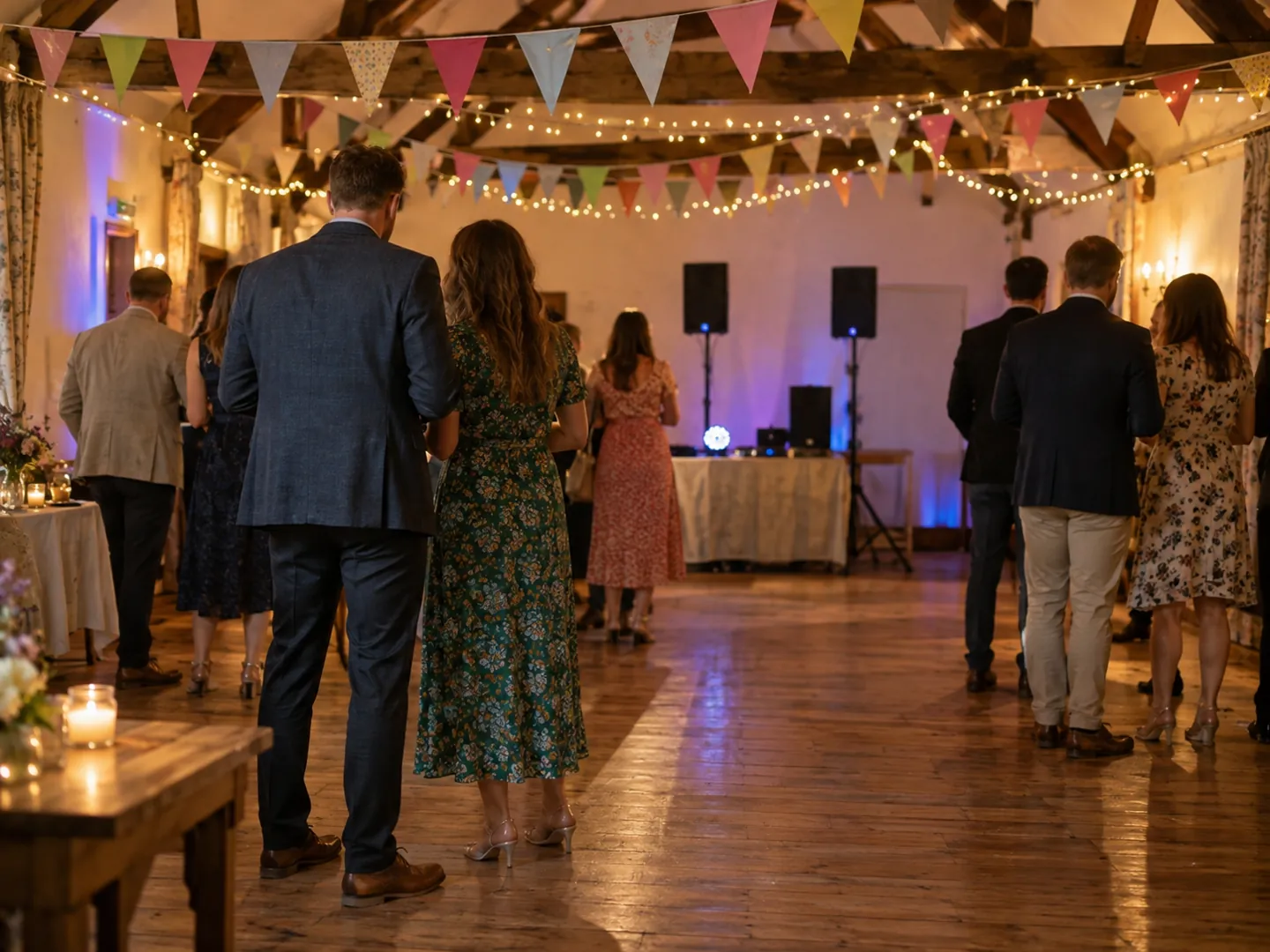
Plan the music to finish by 11pm, or check whether the venue's licence covers later entertainment.
Keep a realistic headcount. The exemptions for music stop at 500 people.
Find out whether the venue is licensed to sell alcohol and whether it holds a music copyright licence for public performance.
For a small one-off event with regulated entertainment, alcohol sales or late night refreshment, the organiser can give the council a temporary event notice.
TWO NUMBERS WORTH KNOWING
Most of the rules for music turn on
the time of day and the size of the crowd.
8am–11pm
When the music exemption can apply
Outside these hours, a licence may be needed for any entertainment, whatever the venue or audience size.
HOURS · GOV.UK
500
Largest audience for the exemption
Above 500 people, amplified live or recorded music may need a licence. A temporary event notice covers events attracting fewer than 500 people and lasting no more than 168 hours.
AUDIENCE · GOV.UK
Recorded music on premises not licensed to sell or supply alcohol may also need a licence, unless an exemption applies.
TWO LAWS, TWO LICENCES
Entertainment licensing under the Licensing Act 2003 is run by local councils, and one application can cover all kinds of regulated entertainment and alcohol sales. Comments on applications only count if they relate to four licensing objectives: preventing crime and disorder, public safety, preventing public nuisance and protecting children from harm.
Copyright is a different system. The Intellectual Property Office explains that licensing bodies grant permission on behalf of many rights holders and pass on royalties. For music played in public, PPL PRS Ltd issues TheMusicLicence on behalf of PRS for Music and PPL.
Questions
Usually not an entertainment licence, if the music is between 8am and 11pm, the pub is licensed for alcohol and the audience is no more than 500. Copyright licensing for playing music in public is a separate question.
GOV.UK says a licence may be required for anyone who provides any entertainment between 11pm and 8am. Check whether the venue's premises licence already covers it.
Not a music licence, as long as it is a private party for residents and the music has not been advertised to make money or attract people.
A TEN lets an organiser put on a relatively small-scale event, with fewer than 500 people and lasting no more than 168 hours, that includes alcohol sales, late night refreshment or regulated entertainment. You give it to the local council.
The Intellectual Property Office lists PPL PRS Ltd (TheMusicLicence), which licenses music played in public on behalf of PRS for Music and Phonographic Performance Limited (PPL).
Updated
ABOUT THIS NAME
doodledeejay.com is part of the DoodleSale portfolio. It isn't in an auction right now, but you can ask about leasing it.